Samsung is now shipping samples of HBM4E memory, which is faster and has higher capacity
Samsung Levels Up AI Memory with New HBM4E Samples
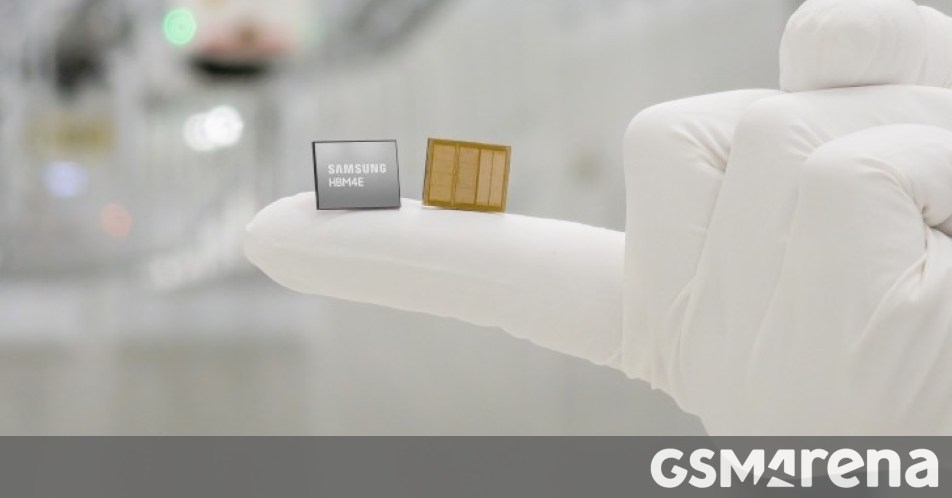
Earlier this year, Samsung started shipping its HBM4 memory, promising that an even more advanced version was on the horizon. That time has arrived. Samsung is officially shipping samples of its HBM4E memory, a next-gen variant designed to handle the massive data demands of modern AI while running cooler and more efficiently than its predecessors.
The headline improvement here is capacity. While standard HBM4 topped out at 36GB, the new HBM4E 12-layer design bumps that up to 48GB. For enterprise users looking for even more scale, Samsung is also developing a 16-layer variant that will hit 64GB, alongside a leaner 32GB 8-layer option to fill out the lineup.
Faster Performance, Better Cooling
It’s not just about how much data you can store, but how fast you can move it. HBM4E delivers a 20% speed boost over HBM4, reaching 14Gbps per pin. This results in a massive total bandwidth of 3.6 terabytes per second per stack. Samsung has also hinted that this isn’t the ceiling—future iterations could see those speeds climb to 16Gbps.
High-performance memory is notorious for generating heat, but Samsung has addressed this through a combination of 6th-generation “1c” (10nm-class) memory dies and a 4nm logic base die. This architectural shift provides two major benefits:
- Energy Efficiency: A 16% reduction in power consumption.
- Thermal Management: A 14% reduction in thermal resistance, making these stacks much easier to cool in dense server environments.
“following the successful mass production of HBM4, Samsung has once again demonstrated its distinct technological edge with HBM4E,” said Sang Joon Hwang, Executive Vice President and Head of Memory Development at Samsung Electronics. He noted that the company’s preemptive investments in infrastructure are intended to keep Samsung at the forefront of the global AI memory market.
As AI models continue to grow in complexity, the hardware supporting them has to evolve just as quickly. By increasing density and lowering the thermal footprint, Samsung is positioning HBM4E as the backbone for the next generation of AI supercomputing.
About The Author