SK Hynix Unveils HBM4E: Massive 48GB Capacity and Blistering 16Gbps Speeds
The Future of AI Hardware: SK hynix Samples Ultra-Fast HBM4E Memory
If you’ve been following the AI hardware race, you know that standard DDR memory just doesn’t cut it anymore. When it comes to training massive models, speed is everything, which is why High Bandwidth Memory (HBM) has become the industry gold standard. Now, the stakes have been raised again: SK hynix has officially started shipping samples of its cutting-edge HBM4E memory to partners.
The headline number here is pure performance. This new HBM4E standard hits a staggering 16Gbps of bandwidth per pin. To put that in perspective, the previous HBM4 generation topped out at 10Gbps, and even Samsung’s recent HBM4E sample announcement clocked in at 14Gbps. SK hynix is clearly pushing for the lead.
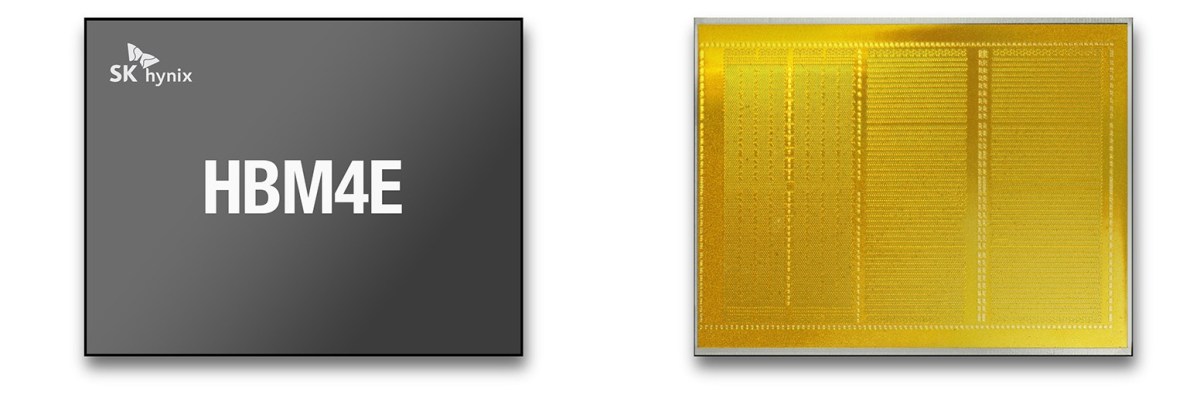
Current samples feature a dense 12-die stack architecture, delivering a massive 48GB of capacity per unit. Since modern AI accelerators rarely rely on just one, we’re looking at a huge jump in total memory headroom for next-generation systems.
Efficiency and Cooling Improvements
It’s not just about raw throughput. SK hynix reports that HBM4E is roughly 20% more power-efficient than its predecessor. Managing heat is the silent killer in AI hardware, so they’ve utilized a technique called MR-MUF (Mass Reflow Molded Underfill). By using a protective liquid between the silicon layers, they’ve managed to reduce heat resistance by 17%, ensuring these stacks stay cool even under heavy computational loads.
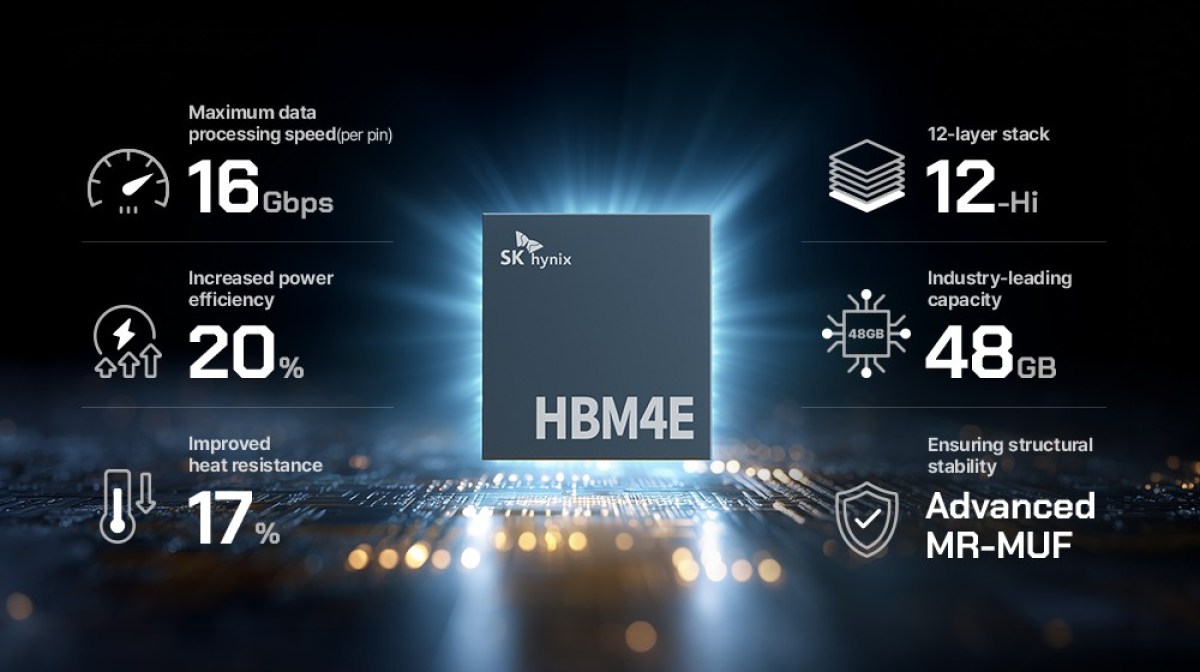 SK hynix’s HBM4E memory hits 16Gbps per pin with improved power efficiency.
“The company was able to deliver samples of the 12-stack HBM4E on schedule thanks to our deep expertise in HBM production,” the team at SK hynix noted in their official release. “We are now working closely with our partners to ensure a smooth transition to mass production.”
As AI models grow ever more complex, components like these will be the backbone that makes them possible. With both SK hynix and Samsung racing to supply these chips, the next generation of AI hardware is shaping up to be significantly faster and more efficient than what we have today.
About The Author





