Samsung is facing the biggest worker strike in its history over employee bonuses

Samsung’s Record Profits Aren’t Making Everyone Happy: Inside the Biggest Strike in Its History
You’d think record-breaking sales would mean big celebrations at Samsung, but the mood at the company’s Device Solutions (DS) division is anything but festive. Instead of popping champagne, the tech giant is facing a historic labor crisis. Roughly 48,000 employees are ready to walk off the job for 18 days, marking the largest strike the company has ever seen.
The Core of the Conflict: It’s All About the Bonuses
The DS division is essentially the heart of Samsung’s hardware. It’s split into three main parts: the memory business (which is currently booming), System LSI (chip design), and the foundry business (manufacturing). While the memory side is raking in cash thanks to the massive global AI surge, the people behind those profits feel they aren’t getting their fair share.
The tension has been simmering for a while, but it reached a boiling point when employees looked over at their rivals. SK Hynix, the world’s second-largest DRAM maker, has also been riding the AI wave. However, unlike Samsung, SK Hynix recently scrapped its bonus pay cap. Last year, this led to SK employees bringing home bonuses nearly three times larger than what their counterparts at Samsung received.
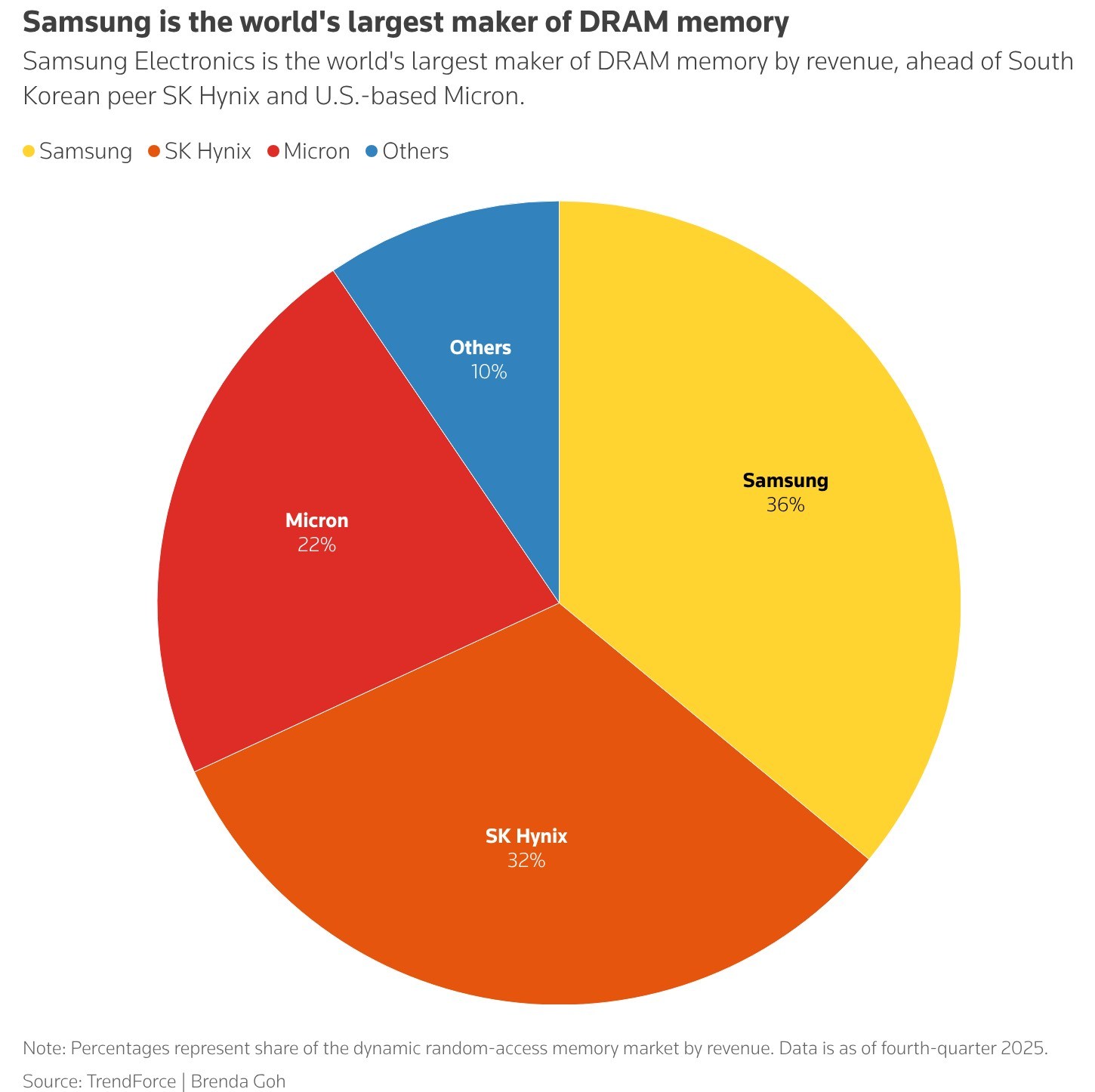
Samsung remains the DRAM leader, but rivals are closing the gap (Source: TrendForce)
What the Union Is Demanding
Samsung currently has a rigid policy that caps bonuses at 50% of an employee’s annual salary. The union wants that cap gone. Their proposal? A more transparent system where 15% of the company’s annual operating profit is allocated directly to employee bonuses.
There’s also a growing sense of internal friction. Samsung wants to prioritize bonuses for the 27,000 workers in the memory division, potentially giving them payouts six times higher than those in the LSI or foundry sectors. The union argues this is a recipe for disaster, fearing a mass exodus of talented engineers to competitors like SK Hynix if the pay disparity isn’t addressed.
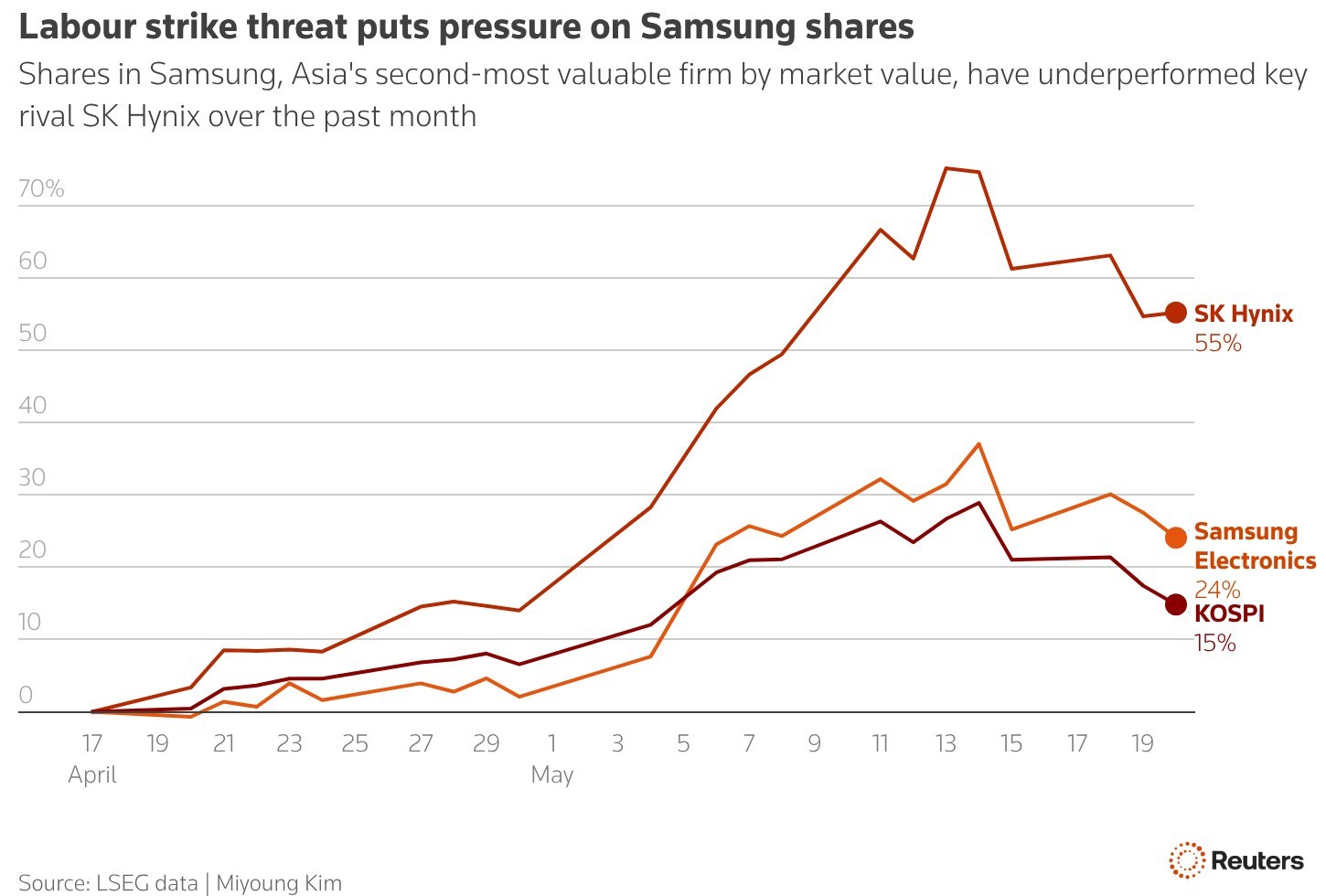
Market trends for Samsung and SK Hynix over the last quarter (Source: Reuters)
Why This Matters Beyond the Boardroom
To understand the scale of this, you have to look at Samsung’s role in its home country. Samsung accounts for nearly a quarter of South Korea’s total exports. If this strike proceeds and lasts the full 18 days, it could actually dent the national economy. Central bank officials have hinted that up to 0.5 percentage points of South Korea’s predicted 2% annual growth could be at risk.
Samsung isn’t sitting still. They’ve already secured a partial court injunction to keep over 7,000 essential workers on the production lines to prevent permanent damage to the delicate chip-making equipment. There’s also a high chance the Korean government will step in with “emergency arbitration,” a move that would legally pause the strike for 30 days to force a mediation.
As the Thursday deadline looms, all eyes are on the negotiating table. Whether Samsung chooses to break its traditional pay structures or risks a full-scale shutdown remains to be seen, but the outcome will set a massive precedent for the semiconductor industry.
About The Author