Microsoft unveils the Surface RTX Spark Dev Box: a desktop RTX Spark-powered computer
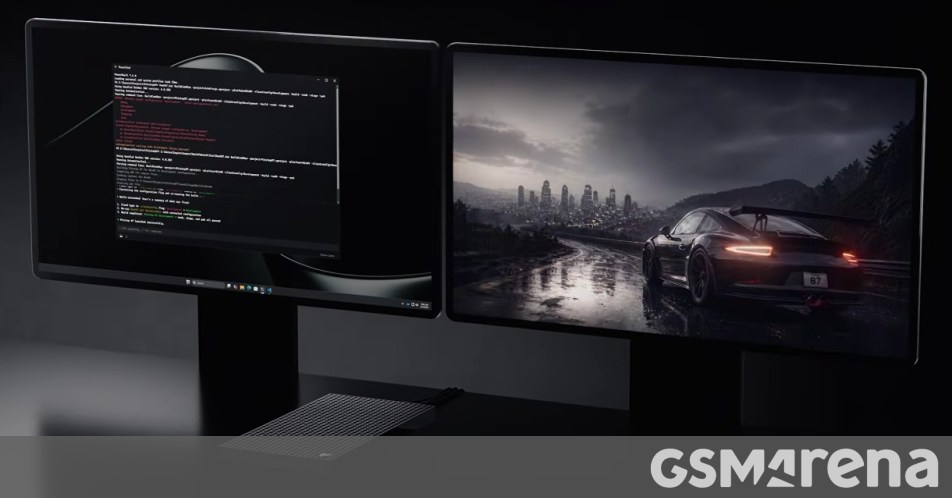
Meet the Surface RTX Spark Dev Box: Microsoft’s Answer to the AI Workstation
Not long ago, Microsoft turned heads with the Surface Laptop Ultra, a machine clearly aimed at the MacBook Pro crowd. But for those who don’t need a screen and keyboard—or simply want more sustained power than a laptop chassis can provide—there is something even more specialized on the way. Meet the Surface RTX Spark Dev Box.
Big Specs in a Small Footprint
The headline numbers are, quite frankly, staggering for a desktop of this size. We’re talking about 1 petaflop of FP4 compute and 128GB of unified RAM. Why does that matter? Because it means you can run 120-billion parameter AI models locally. No cloud, no subscription, just raw local power.
Under the hood, the RTX Spark silicon is a bit of a hybrid monster. It combines a 20-core Grace CPU (a mix of Cortex-X925 and Cortex-A725 cores) with a Blackwell-based GPU. To put that into perspective, the graphics side is roughly equivalent to a desktop RTX 5070 with 6,144 CUDA cores. The difference here is the massive VRAM capacity provided by that unified memory—something you just won’t find on a standard consumer graphics card.
Built Specifically for Developers
Microsoft isn’t just selling hardware here; they are selling a workflow. The Dev Box ships with Windows 11 Pro, but not the version you’re used to at home. Right out of the box, it’s pre-configured for heavy lifting:
- Dark mode is enabled by default (because, obviously).
- Popular development tools are pre-installed.
- PowerShell 7 is the default terminal experience.
- WSL 2 is fully configured with GPU passthrough and CUDA support.
The inclusion of robust Linux support (WSL) is a smart move. Since most modern AI tools and servers are built on Linux, being able to develop and test in that environment locally on a Windows machine is a huge productivity win.
Thermal Management and Design
The physical design of the Box is both functional and a little poetic. It features a monolithic aluminum body peppered with 1,000 air vents—a design choice Microsoft says is a nod to its 1,000 teraflops (1 petaflop) of performance. While the 3D-printed body looks sleek, this isn’t a silent, passive machine. It’s designed to dissipate up to 100W of heat, ensuring that the RTX Spark chip doesn’t have to throttle during intense workloads.
This is really where the Dev Box pulls ahead of its laptop sibling. While the Surface Laptop Ultra has the same chip, physics is a cruel mistress. In a desktop form factor, you get the thermal headroom needed for sustained, high-performance tasks like AI inference or training.
Ports, Connectivity, and Future Potential
For a compact machine, it doesn’t skimp on the essentials. On the back, you’ll find:
- 1x HDMI port
- 2x USB-C ports
- 1x USB-A port
- Ethernet for stable networking
- A 3.5mm headphone jack
Whether you use it as your primary workstation or tuck it away in a corner as a dedicated AI agent to handle office automation, it’s a versatile little cube. To be honest, it feels like the “Windows Mac Studio” we’ve been waiting for, and we’re hoping a mass-market version for creative professionals follows this developer-focused release.
Availability
The Surface RTX Spark Dev Box is slated for release later this year. In the US, it will be an exclusive through Microsoft.com. We are still waiting on official pricing, but since it ditches the high-end display and battery found in the Surface Laptop Ultra, there’s a good chance it will be the more affordable way to get RTX Spark power onto your desk.
About The Author