TSMC predicts that the global chip market will reach $1.5 trillion by 2030 because of AI
The AI Gold Rush: Why TSMC Sees a $1.5 Trillion Future for Semiconductors
Remember when the semiconductor industry was mostly about the latest smartphone in your pocket? Those days aren’t exactly over, but the focus has shifted dramatically. Thanks to the relentless boom in artificial intelligence, the global chip market is bracing for a massive financial windfall.
In a recent presentation, industry giant TSMC updated its forecast for the global semiconductor market, and the numbers are staggering. The company now expects the market to hit $1.5 trillion by 2030. To put that in perspective, their previous estimate was a more modest $1 trillion. That is a 50% jump in expectations in a very short window of time.
AI Is the New Driver of Growth
So, where is all this money coming from? It isn’t just your next iPhone upgrade. According to TSMC’s internal breakdown, AI and high-performance computing (HPC) will account for a whopping 55% of that $1.5 trillion market. Smartphones, which used to be the primary engine of the industry, are projected to take up just 20%, while the automotive sector will sit at around 10%.
We aren’t waiting until 2030 to see this shift, either. TSMC expects the demand for AI accelerator wafers this year to be 11 times higher than it was in 2022. It’s a remarkable pace; in just four years, AI has moved from a tech-bro curiosity to the primary concern of every C-suite executive on the planet.
Building the Infrastructure: From Arizona to the World
TSMC isn’t just talking about growth; they are spending billions to build the infrastructure to support it. While the most cutting-edge silicon production remains in Taiwan, the company is aggressively expanding its global footprint to diversify the supply chain.
- The United States: The Arizona fab is already operational, currently producing 4nm chips. While it’s not the absolute bleeding edge yet, plans are in place to move to 3nm and 2nm production. A second facility is nearly complete, with third and fourth plants already in the works. TSMC reports that production yields in Arizona are already rivaling their Taiwanese counterparts.
- Japan: TSMC’s Japanese facilities currently focus on older 22nm and 28nm nodes. These aren’t for high-end AI servers, but they are essential for the automotive industry and low-power devices. Moving forward, they plan to introduce 3nm production to a second fab in the region.
- Germany: Europe is also getting a piece of the pie. A new plant in Germany will focus on 22nm and 28nm parts—a move that will surely provide some breathing room for German automakers—with future plans for 16nm and 12nm capabilities.
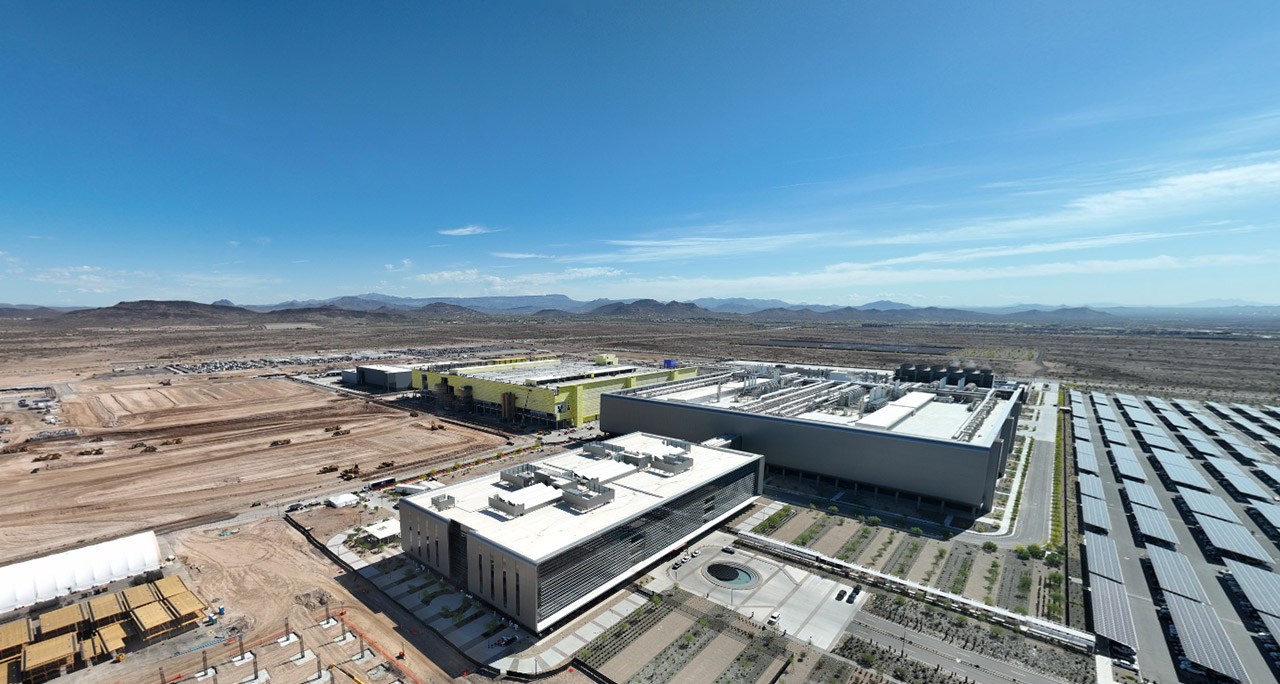
TSMC’s expanding footprint in Arizona is a cornerstone of their global strategy.
The scale of this expansion is hard to overstate. TSMC is even looking to acquire more land for future growth, ensuring they have the room to scale as the world becomes increasingly hungry for high-performance silicon. As AI continues to evolve from a trend into the backbone of modern computing, TSMC is positioning itself to be the foundry that powers the entire revolution.
About The Author