Maruti e Vitara Price – Images, Colours & Reviews
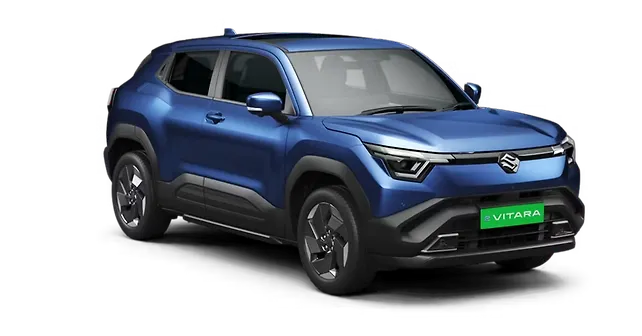
Why the Maruti Suzuki e-Vitara is Quietly Redefining the 20-Lakh EV Segment
Let’s cut through the noise: if you’re looking at an electric vehicle in the ₹15–20 lakh bracket, the spec sheet usually looks pretty similar across the board. Then comes the Maruti Suzuki e-Vitara. While everyone else is playing it safe, Maruti has dropped a 61 kWh battery pack into this segment—a move that honestly leaves the competition scrambling.
The Real-World Range Reality
You might see some lower range figures floating around in early test drive reports, but there’s a good reason for that. During demo runs, sales teams often crank the AC down to a chilly 21°C and drivers tend to have a heavy right foot to test that instant EV torque. Naturally, the range takes a hit.
In real-world conditions, however, the e-Vitara is a different beast. When driven sensibly at highway speeds of 80-90 km/h in Eco mode with zero regen, you can consistently see 6 to 7 km per kWh. That is impressive efficiency for a car of this size.
Charging and Infrastructure: The Nexa Advantage
One of the biggest hurdles for EV adoption is charging anxiety. Maruti is tackling this head-on. By leveraging the vast Nexa outlet network, owners get access to exclusive chargers. You aren’t just buying a car; you’re buying into a dedicated ecosystem that doesn’t force you to hunt for third-party chargers every time you’re low on juice.
Regarding charging speeds, it seems Maruti has capped it at 60 kWh for now. While some might want more, it’s likely a deliberate move to preserve long-term battery health. Don’t be surprised if we see a software update in the future that unlocks even faster speeds, much like what we’ve seen with the Creta EV.
Premium Build and Smart Competition
If you think Maruti only focuses on light cars, the e-Vitara will surprise you. The build quality feels substantial, comfortably sitting in the same league as European heavyweights like Volkswagen and Skoda. It feels solid, planted, and premium.
When you stack it up against the rivals, the value proposition is hard to ignore:
- Maruti e-Vitara: 61 kWh battery
- Tata Curvv EV: 55 kWh battery
- Hyundai Creta EV: 51 kWh battery
- Tata Nexon EV: 45 kWh battery
A Warranty That Actually Makes Sense
One of the most underrated features of the e-Vitara is the warranty structure. Most manufacturers, like Tata or MG, offer those enticing 8-year warranties only to the first owner. If you sell the car after three years, the second owner loses out. Maruti is playing it differently, offering an 8-year battery warranty that provides genuine peace of mind for the long haul, regardless of how many people have owned the car. Since very few people will actually keep an EV for 15 years, this makes the e-Vitara a much better prospect for resale value.
If you’re looking for a vehicle that balances battery size, build quality, and a reliable service network, the e-Vitara isn’t just a choice—it might be the smartest investment in the segment.
About The Author